
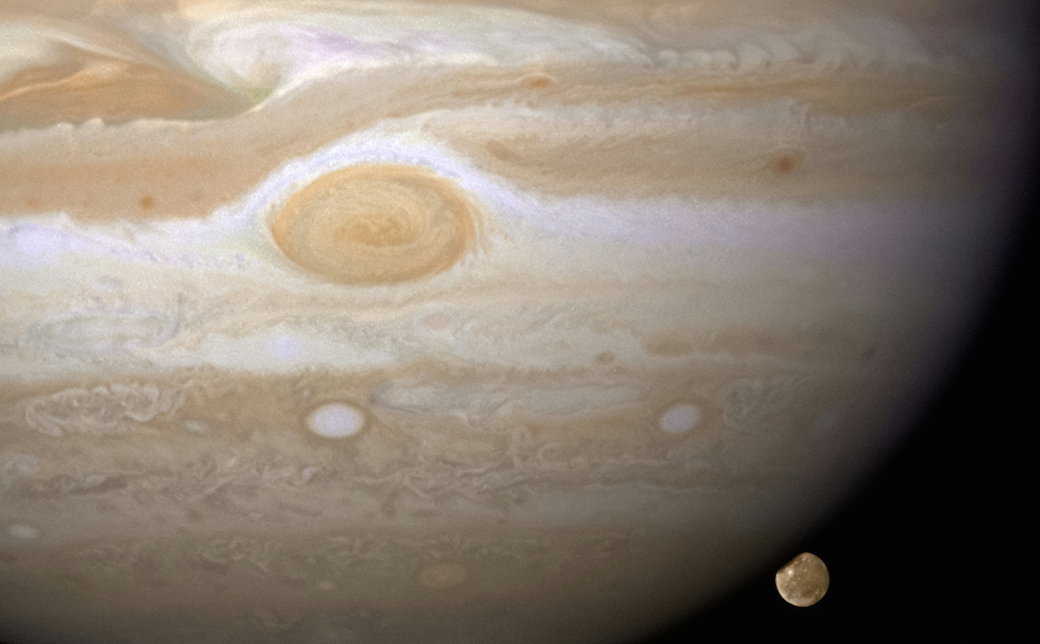
Photo (cropped) by NASA Hubble Space Telescope via Unsplash
Rendezvous with the Enemy
By CJ Erick
I knew I needed his help the day I realized the human staff despised me, despised all Frygians.
But why him, the lover who I’d perversely craved against custom, against reason? Why this man, this one of four station managers, working the human-led expansion into the orbital region of the fourth and fifth planets in their star system? Because I believed I could trust him? No. Because he was the most competent of the four managers? No.
Because when he spoke, at a project construction meeting, at a youth education function, in those infrequent times when he made his voice heard, his people listened.
Of all the star systems the Frygians have occupied, the Sol System was proven the most difficult to win over. Our progressive works there hadn’t improved the troubles. As advance team leader, I could feel the unspoken time allowance shortening. If the humans wouldn’t cooperate with the Frygian occupation and development plans, they would be labeled rogue and dangerous.
I’d walked into the project offices in Jupiter Station One and all conversation stopped. Looks passed between them, a group of nine humans in green bodysuits, supervisors and lead workers on the spaceport expansion project. Three of them left the office immediately, their only greetings brief nods before the door slid closed behind their retreat. The others, all except the lead, Charla Timmons, turned back to their workstations and pretended to be absorbed.
I invited Timmons to take me on a tour, an informal observation of progress in physical expansion of the station. I was in ferranee phase, the closest to that of a human cis-female; narrower shoulders, higher voice, dark coloring around the edges of my face. I was grateful she had never seemed to find me physically attractive, although I was aware she coupled routinely with human females.
We paused at the engineering department, where my colleague Sitouree stood at a wide table, looking over displays with three human engineers, recent structural plans and calculations. Sitouree’s suggestions on reducing unnecessary recreation facilities and increased use of Frygian plast-alloys were not well received by the technical staff there, their responses moving between blank stares to barely restrained scowls, as humans would call such harsh expressions, a sin-chok in our language.
Next, we passed the observation windows of the manufacturing area where the modular units were in various stages of construction. Two Frygian operatives, two of my best with success in other star systems, were passively observing construction activities. They were obviously being avoided by the work crews and immediate supervisors, forcing them to step in for assertive interventions when processes seemed to be less than optimal.
Last, we held a short meeting with the six primary department heads, for a meeting to summarize the progress schedule metrics and difficulties they’d encountered. In brief, the project was behind schedule, with major risks and uncertainties remaining unmitigated. Afterward, I isolated Ms. Timmons, explaining my concerns, my need for the insight from someone such as her close to the operation, and an honest assessment devoid of judgment on my part.
Her response was succinct and direct, increasing my respect for her.
“They don’t trust you.” She stammered then, shocked by her bold admission. “It’s not just you. They don’t trust any of the Frygians.”
“Is it our difference in appearance?” I asked, “or are we not presenting our message of sustained progress for humans here not being transmitted optimally?”
She hesitated, and then answered only after I insisted there would be no retribution for relating information I needed to hear.
“Humans always hate their conquerors.”
Later that evening, I transmitted the request for him to meet. In human manner, I tried to word the dispatch as a request and not an obligation. The subtleties of such nuance can be exhausting.
***
When the shuttle he was arriving in dropped into orbit, the station was traversing the dark side of Jupiter, the Red Spot a swirling splash the color of human fermented grapes on the planet’s mottled surface. What did he call the planet’s constantly moving clouds? Fingerpainting. Something human children did to keep them occupied during their early growth, he had told me.
So many things I didn’t know or understand about Sol’s dominant sentient species. Was that why he had always been so interesting to me? An otherworldly puzzle to solve? This was my fifth occupied system assignment, and no other foreign beings had been of any personal interest. Those assignments had all had been successful, perhaps why I was given the troublesome Earth system.
This brief reunion with him brought uncomfortable feelings. It would help that I was in what the humans would call a “female phase.” When we were lovers, he’d struggled with my shifting manifestations, my four genders, humans would say. The humans and their names, their precision in identification of all things, living or non-living, even their own kind and themselves. We are human, they would say, and you are Frygian. And queer, they might add. Such precision in language, and yet the concepts and ideas behind the words were so often much more dubious than they would admit.
My people were not bothered by the beautiful elegance of shifting meanings, genders, ideas, and social interactions. Perhaps this shifting nature was what had allowed us to advance in technology beyond mere rocketry to interstellar travel, where the humans had not. And so the Frygians ruled “the heavens.” More human words that could mean many things.
We met in the café where, in that past we’d begun together, I requested we form a permanent residence status. I’d been in a declining quartal phase, something he had called my “double hermaphroditism,” thinking his disrespect would damage. For a human, he could be a fool. A brilliant one, but still. I sometimes used words that were more effective, not to hurt him, but to educate. Words like “savage” and “neanderthal.” I was foolish too, then, thinking my guidance and gentle manipulation would strengthen his perceptions. Perhaps he would rise above his nature, be the one to lead the humans to find their own interstellar drive. But my words had only broken our bonding.
He arrived to our meeting at the time we agreed, which was a promising sign. He was tall, nearly as tall as me in this phase, and more robust. His structure was beautifully proportioned, as if by mathematical design for than genetic algorithm, his face a sculpture of muscle, skin, and bone. It had been a colonial surprise for my people to find here, only five-hundred light years away, another bipedal species, almost Frygian, except for the difference in superficial coloration, the human absence of antennae and proboscises on each side of the oral opening, and the longer bodies and shorter legs, jointed oddly until one grew accustomed. And I became very accustomed. As much as he struggled with my manifestations, our physical encounters became fodder for my traditional cyclic singing.
He smiled, his teeth short and clipped like quartzite tablets. His smile prompted changes in my hormone profile, as it had so often in the past.
“Cessree,” he said, his voice the same, deep, resonance it always held, not monotone, not monotonous, but consistent in timbre and harmonics. Never phasing or changing, altered only under the irritation of inhaled drugs or ethanol.
“You look…amazing,” he said.
“As do you.”
The cafe host, a human female trying feebly to hide her resentment at me, moved to seat us near the door. I requested a table hear the windows overlooking Ganymede’s striated sphere, Jupiter’s satellite looking very much like a crystalline Frygian heart, subtracting the numerous volcanoes and shifting glow of aurorae. We’d chosen Ganymede for the reasons we chose each base planet in all of our occupied systems; the presence of water, and non-threatening distance from the indigenous sentient’s home world. Perhaps seeing this key location of Frygian engineering and progress would influence him to return?
We regarded each other in silence. Was this a truce? A standoff? Or just an awkward moment between two beings who had parted on difficult terms, and had forgotten how to converse? I wanted to avoid leading the discussion, feared implying a sense of superiority. But he wouldn’t relieve me of the burden.
“Thank you for coming,” I said, breaking the silence. “Your trip from the Mars station was comfortable?”
I could hear his hypnotic voice in my mind, as I did sometimes at night, the possible answers he might speak.
Did I really have a choice?
I’m sure this isn’t a social visit.
I only have an hour to spare.
I was surprised by your invitation.
I thought about not coming, but that would have been too human.
None of these were correct.
“It’s good to see you,” he said. “I’ve been following your work. Amazing stuff.”
“We’re trying,” I said, “to make best use of the system’s resources.”
He smiled, perhaps seeing a joke I hadn’t intended. Human mirth is a puzzling thing, even for those of us who’ve interacted for these six Earth years, since the early occupation. His amusement may have been at the joke we shared when we were coupled, of how I could read his mind and how he knew I could by how few words were needed between them.
He said, “I’ll take a shot at why we’re here. Your recruited technicians and engineers aren’t buying into the program. They don’t trust the Frygian motives.”
“The project is not at optimum,” I admitted. “I need you to be involved.”
“You really need me? This is where you don’t make me ask ‘What’s in it for me?’”
“Because you wouldn’t accept anything I offered.” I left out the implied from me. “But, I am authorized to offer you certain incentives. “
“C’mon, Cessree. You’re authorized to offer just about anything. You’re the lead of the entire delegation here.”
“You know I don’t have absolute authority.”
“Maybe. But pretty close to it.”
It was ironic he seemed able to guess my mind then, in that moment of decision, even after a long separation.
The first time my greater authority became a stilki between us – a contest, a conflict of both mental and physical aspects, was a mere moment in my office on the satellite. We had joined physically by then but not yet fully coupled. I was in bontee phase, similar to the human male gender, only the third time he’d seen it in me. He said it was very different having a lover of shifting genders, relative to merely observing Frygian guides passing through phases.
***
We stand opposing, in the small sitting room in my offices. In bontee phase, I am very close to his height and breadth. My gender phasing is normal for me, and the difference in relationship dynamics means nothing. But he struggles.
“Give it a rest, Cess,” he says. “I know what I’m doing.”
My voice matches his in tone, and I try to adjust, lower then higher, then not adjusting at all.
“Knowing it and following through are separate functions.” I speak directly, avoiding quaint idioms. This irritates him, which is my intention. “You’ve not been operating at your optimum.”
“And you think I’m abusing the cannabinoids.”
I let him answer his own question.
“Screw you, Cess. I can do this job better than three Frygians even when half-lit.”
“Which means you can surpass six of us if you’re at peak.”
We fight, or argue if one pleases, non-physically until he slams his fist on the table, cracking it. To make a point, I drop my fist on the table, cracking it further. His eyes widen. Then he laughs.
***
Perhaps it should have been a warning. Perhaps it was a sign, but at the time I did the human thing and ignored it.
He said, “You know, when you told me you never wanted to see me again, I thought you meant it.”
“I did…mean it,” I said. “If a belief is meaning. I believed it. I was wrong.”
“Because you want something from me? Or because of some forbidden attraction?”
“I’m not the only guilty one there.”
His smile held, but his eyes narrowed in pain. He laughed. “Hard for me to deny that. So I’m here. We’re both choking on pheromones. Make your pitch.”
I presented my proposal to him. He would return to lead the human division of expansion project, primarily as liaison between the human force and the Frygian guides. Part of this was a program he’d always seemed to admire, the training and skills building programs for his people, the programs I sponsored, intended to bring more humans to a level of technological knowledge closer to Frygian standard. Many of these skills were best learned “on the job,” as the construction and infrastructure plans were brought to fruition. He would direct as he saw best to engage the human workforce. Not just a field supervisor as before, but as program lead, the top human liaison for all Frygian operations.
In exchange, unlimited space travel for him, including interstellar to the Frygian system. Training on vessel operations and eventual captaincy; opportunity to reach full flight status, a member of a small elite class of about twenty non-Frygians. The opportunity to lead humanity into the galactic theater.
“Sounds like an elaborate bribe,” he said to this summary. “And as you said, I wouldn’t likely accept personal gifts as motivation. There has to be more, more for the others in the effort. You understand you’d have to buy more loyalty than just mine.”
“There is, as you would know, stubborn human. You choose three others to follow in your path. You choose also twenty scientists to begin the physics studies in space flight technology.”
I withheld my final perk, one I’d not received authority to provide; the practical engineering of generating micro-singularities, the basis of an early Frygian faster-than-light travel technology. His chosen physicists could “discover” the hardware and AI requirements. Human physicists had simulated the phenomenon. But they were not likely to learn how to create them in the physical environment.
“Impressive offer,” he said. “I can hardly refuse it, can I? Even if I declined the personal benefits, I couldn’t deny the others. But there must be something profound you expect in return. I help you quell discontent among my people? That seems hardly worth what you’re offering.”
“Our goals as overseers of this system remain similar to those of every sentient species we encounter. Uplift through education and training. Allow humans to help us secure our position as overseers, prevent your people from becoming a threat in the future, requiring us to destroy you. Isn’t this what your business people would call a ‘win-win’ scenario?”
“True. How wonderfully human. I commend your negotiating team.” He paused as if digging in for a charge. “My answer is no.”
I wondered if in actuality he had learned to read Frygian minds, or just my mind, or if our quip about his wanting nothing from me was more than speculation.
He said, “Gifts from gods are never free. There’s always a price.”
“We’re hardly deities.”
“Really? You dropped on humanity from the sky. You manifested magic. You are not perfect, driven to aggression, greed, ambition. Your offer is dripping with those things. What aspect of ancient mythology do you not fulfill?”
“And we deities both love and loathe you mortals.”
He smiled. I felt myself melt, a human idiom I entertained. To melt was to flow, to become liquid, to maximize surface area, to feel as much as possible.
He said, “And yet, my answer must remain ‘no.’ We’ll find our own way to heaven.”
We enjoyed the remainders of our dinner in friendly conversation. I felt the universe turning around us. In ferranee, my arousal consumed me as animal scents in my head, buzzing in my ears, my heart a scintillating fork in my chest. He seemed similarly uncomfortable. Was this torturous compulsion that of love untouchable, the mythical forbidden fruit the human religions spoke of? For what purpose, beyond the justification of drive to species survival? To be drawn together as by the undeniable gravity of a cosmic singularity?
It was my yearning for the unconquerable, the “rogue and dangerous” that was his essence. And it was likely to lead to both of our deaths.
***
Two Earth days after he left the Jupiter station, I took an unplanned trip from Ganymede to the outermost human colony on Mars. The colony structures were old and beginning to show age in the tarnishing of the metal walls and domes. But the vibration, the expansion of terrestrial life was still there. If Earth had become a trash fire, as the project workers called it, Mars was still a vessel of hope.
I ventured to the children’s education center where he had found an occupation after leaving the expansion project. I felt he was wasting his time, tutoring average human children, no disrespect intended. There may be no greater calling than teaching young beings. But not for one such as him, one for whom the fate of the Solar System might hang.
There is an observation deck for parents and relatives to watch the human larva being instructed in the ways of molting, expanding, molting again – yes, human metaphors, I’ve been contaminated by them. Metaphors for growing into adults. All this to reach reproductive maturity, to carry on the species even as Frygians do by other reproductive means, eventually dying and vacating our worlds for the new generations.
At first, I lingered in the shadows of the observation deck and watched him. Not my style to hide, but I watched him with the larva – the children – his quiet patience with them. I watched them cling to his voice just as his colleagues at the station, as if he spoke from a mount, as if he were a great teacher who’d been touched by a god, and instructed to lead. Except he’d chosen to lead them away from such mythology, toward the divine in technology, not toward a spiritual light.
I stepped from the shadows of the observation deck, and he saw me at last, pausing as our eyes met, before he ignored me and re-engaged with the children. He was teaching them how to fold wide pieces of white paper into winged shuttles and rockets, painting them in prismatic colors with their naked fingers. But he knew that I knew his mind was with me, the conqueror, the god looking down on him. Ancient Frygian mythology speaks of a ferranee goddess, one just and strong and terrifying, much like the human goddess Athena, offering love and gifts to those humans she adored.
To reject her offerings was a death sentence for the desired.
I watched him shine, glow like a welcoming beacon for his charges, watched him for an hour, then longer, couldn’t bring myself to leave. When I could pull myself away at last, I felt an unexpected pain in my chest. I left Mars for my office on Ganymede.
In these days following, I’ve thought about deleting all the files I prepared on the engineering of micro-singularities. If they were to be discovered, there would be serious punishment for me, removal from the system, reassignment to transportation administration or worse. The loss of respect and honor would be untenable.
Something human in me won’t let me destroy the files. A sensation has evolved within me, something too quaint and precious to be Frygian, an emotion that feels entirely human. Perhaps it is this thing they call Hope.
——–//——–
CJ Erick’s stories and poems have been published by Lindenwood Review, Brilliant Flash Fiction, Abyss & Apex, Camden Park Press, MetaStellar, Public Poetry, Horizon Review, and others. His Pushcart-nominated short fiction was included in Best Small Fictions 2023. He writes in multiple genres, publishes novels in a space fantasy series, and dabbles in poetry. He lives in the Dallas area with his wife and their superhero rescue dog Gretchen, calls his sourdough bread starter “Ursula” (K. Le Guin), and cooks crazy-good Cajun food for a Midwest Yankee.